
Symptoms of Thyroid Problems: How to Tell and What to Do Diagnostic Testing

You sleep a full night and still wake up tired. Your weight is changing but your habits are not. You feel cold when everyone else is comfortable, or your mood feels out of step with your life. The symptoms of thyroid problems are easy to blame on stress or getting older, but several of them showing up together are worth a closer look, because a small gland in your neck may be behind them.
This guide explains what the thyroid does, which signs point toward an underactive or overactive thyroid, how a blood test gives a clear answer, and what to do next.
What Your Thyroid Does and Why Problems Are Common
Your thyroid is a small, butterfly-shaped gland at the front of your neck. It makes hormones that control how your body uses energy, so they affect nearly every organ, even the way your heart beats. Think of the thyroid as your body’s engine. When it runs too slow, everything drags. When it runs too fast, everything races. Either way, you can feel unlike yourself.
How Common Thyroid Problems Are
Nearly 5 out of 100 Americans ages 12 and older have an underactive thyroid (hypothyroidism), although most cases are mild or have few obvious symptoms. About 1 out of 100 have an overactive thyroid (hyperthyroidism). Both are more common in women and in people older than 60.
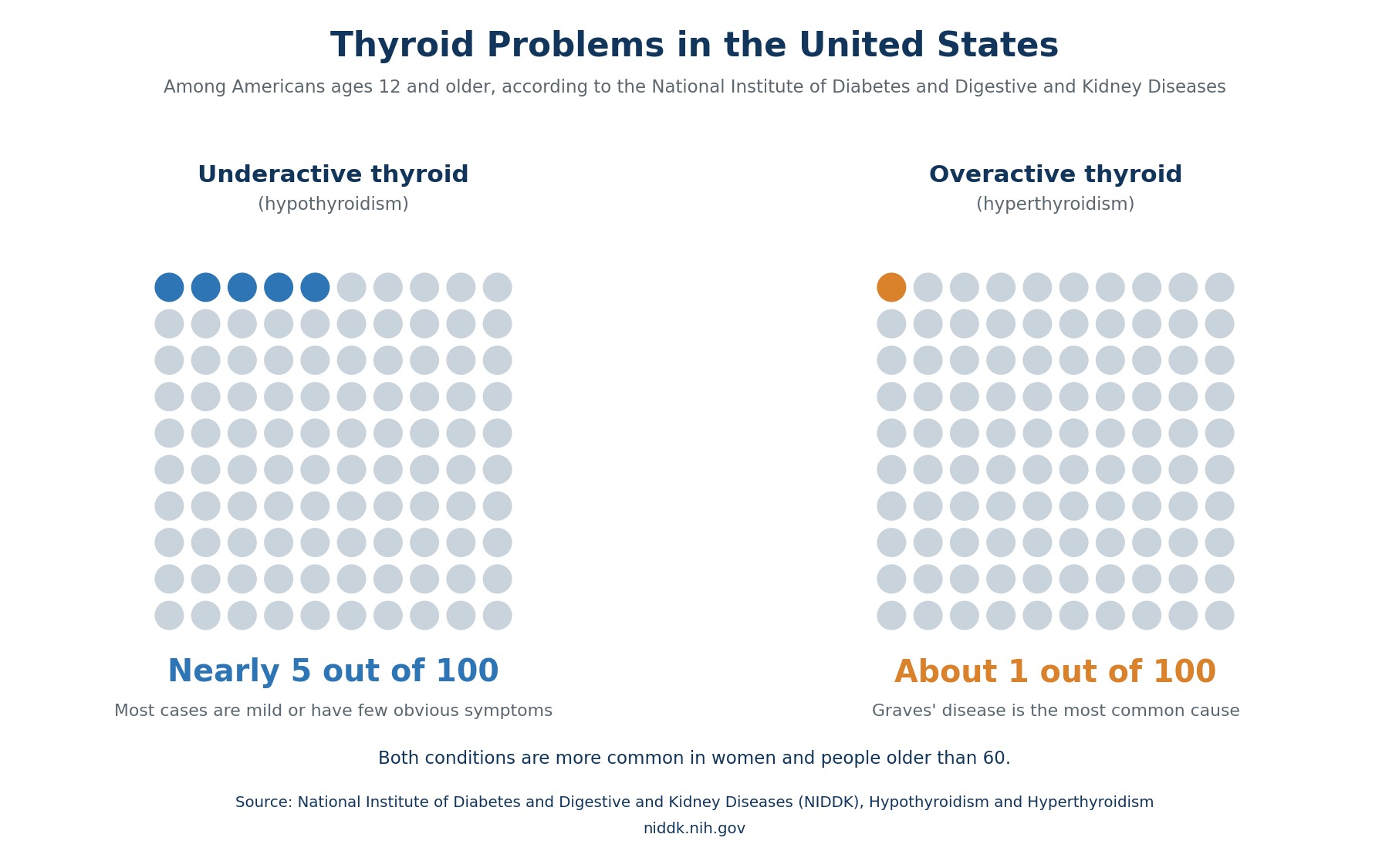
Sources: NIDDK, Hypothyroidism and NIDDK, Hyperthyroidism
Who Is More Likely to Develop a Thyroid Problem
The risk is higher if you have any of the following:
- A family history of thyroid disease
- A past thyroid problem, such as a goiter, or past thyroid surgery or radioactive iodine treatment
- Radiation treatment to the thyroid, neck, or chest
- A pregnancy within the past 6 months
- An autoimmune or related condition, such as type 1 or type 2 diabetes, celiac disease, rheumatoid arthritis, or lupus
Common Symptoms of Thyroid Problems
Thyroid trouble can go in two directions. An underactive thyroid slows things down, and an overactive thyroid speeds things up. The two conditions share a few symptoms, such as fatigue, but most of the signs point in opposite directions.
| Underactive thyroid (too slow) | Overactive thyroid (too fast) |
|---|---|
| Fatigue | Nervousness, irritability, and fatigue |
| Weight gain | Weight loss despite an increased appetite |
| Trouble tolerating cold | Sweating or trouble tolerating heat |
| Dry skin or dry, thinning hair | Rapid or irregular heartbeat |
| Slowed heart rate | Shaky hands and muscle weakness |
| Depression | Trouble sleeping |
| Joint and muscle pain | Frequent bowel movements |
| Heavy or irregular menstrual periods or fertility problems | Menstrual cycle and fertility issues |
Underactive Thyroid Symptoms
An underactive thyroid develops slowly, so you may not notice symptoms for months or even years. Besides the signs in the table, constipation and swelling at the front of the neck (a goiter) can also appear. Because the changes are gradual, many people assume they are just a normal part of life. If weight gain is your main concern, weight management support can work alongside testing.
Overactive Thyroid Symptoms
An overactive thyroid can feel like constant stress. A racing or pounding heart, jitteriness, and trouble sleeping are common. In older adults, an overactive thyroid is sometimes mistaken for depression or dementia, and symptoms can look different, such as loss of appetite or withdrawing from other people.
When Symptoms of Thyroid Problems Call for a Blood Test
One symptom on its own may mean nothing. Fatigue and weight gain in particular are common and do not necessarily mean you have a thyroid problem. It is worth testing when several symptoms appear together, when they build over time, or when you have risk factors such as a family history of thyroid disease. Get urgent medical care for chest pain, fainting, or severe shortness of breath, since these are never something to wait on.
Why a Thyroid Blood Test Gives Clear Answers
Many thyroid symptoms look like everyday stress, poor sleep, or aging, which is why a diagnosis cannot be based on symptoms alone. Providers start with a medical history and physical exam, then use blood tests to confirm what is happening and find the cause.
What a Thyroid Panel Checks
- TSH: a hormone from the pituitary gland that tells the thyroid how much T4 and T3 to make. It is usually checked first. A high level most often points to an underactive thyroid, and a low level usually points to an overactive thyroid.
- T4: a thyroid hormone. Many providers prefer to measure free T4 because it is not affected by changes in blood proteins, such as those caused by pregnancy or oral contraceptives.
- T3: a second thyroid hormone, checked when an overactive thyroid is suspected but T4 is normal.
- Thyroid antibodies: markers that help identify an autoimmune cause, such as Hashimoto’s disease or Graves’ disease.
If the TSH result is not normal, at least one other test is needed to help find the cause. Ask about lab testing options when you schedule, and review wholesale lab pricing for tests that must be processed outside the office.
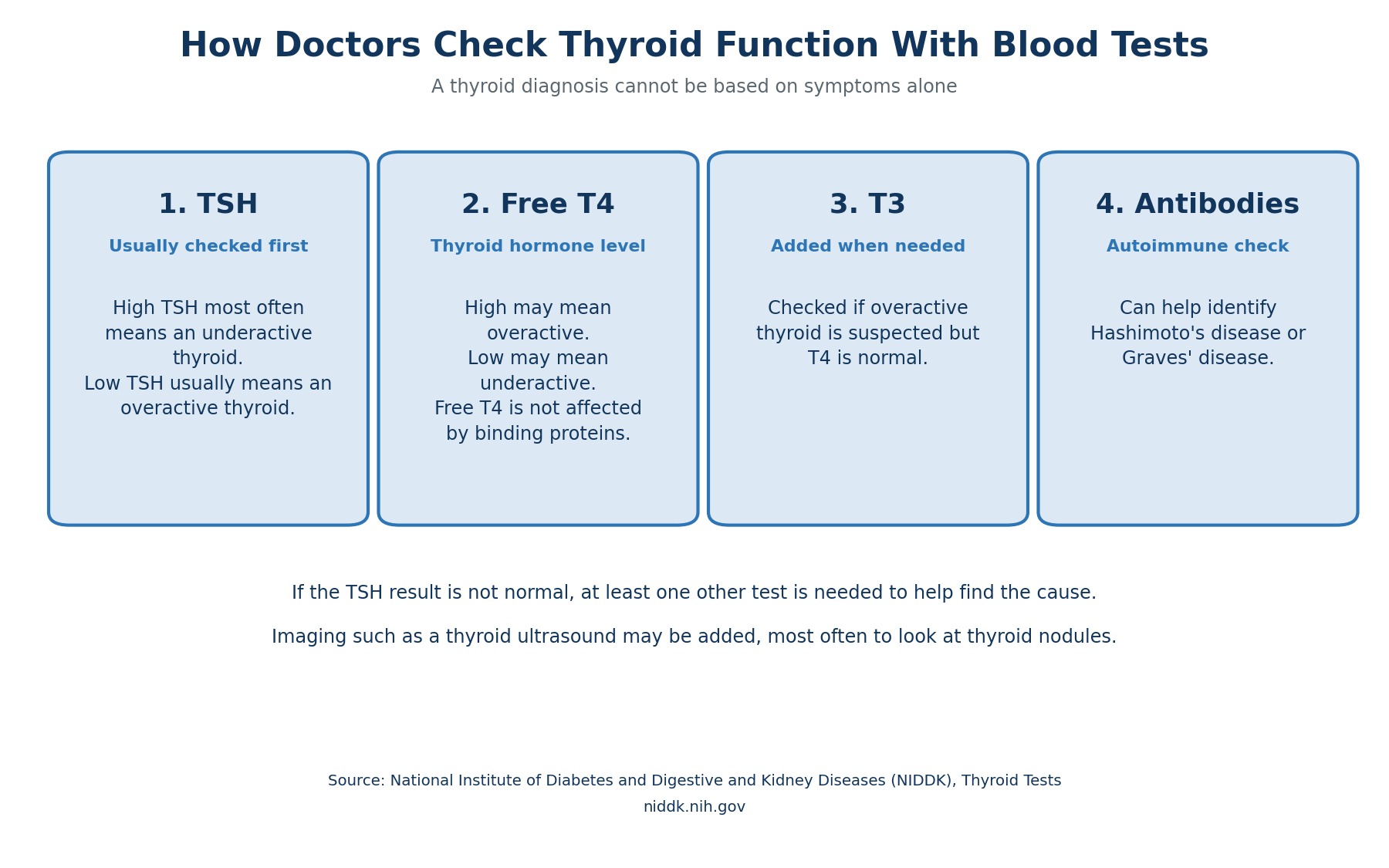
Source: NIDDK, Thyroid Tests
Imaging When Nodules Are Suspected
If a provider feels a lump in your neck, or if blood tests suggest a cause that needs a closer look, an ultrasound can examine the thyroid. Ultrasound is most often used to look at thyroid nodules, and it takes around 30 minutes.
Why Catching a Problem Early Matters
An underactive thyroid can contribute to high cholesterol, so anyone with high cholesterol should be tested for it. Untreated overactive thyroid can lead to an irregular heartbeat, thinning bones, and menstrual and fertility problems. The good news is that thyroid conditions are very treatable once you know what is going on.
What Happens After a Thyroid Diagnosis
Treating an Underactive Thyroid
Treatment replaces the hormone your thyroid can no longer make, usually with a daily pill. A blood test about 6 to 8 weeks after you start helps your provider adjust the dose, and once the dose is right, testing typically repeats in 6 months and then once a year. Most cases can be controlled completely as long as the medicine is taken as directed.
Treating an Overactive Thyroid
Treatment depends on the cause and how severe it is. Providers usually choose among medicines, radioiodine therapy, and thyroid surgery, and they weigh your age, other health conditions, and whether you are pregnant.
Thyroid Health and Diet
Your thyroid uses iodine to make hormones. If you have an autoimmune thyroid disorder, large amounts of iodine from kelp, other seaweed, or iodine supplements can cause or worsen a problem. Diet can support overall health, but it cannot replace testing, so check with your provider before making big changes or starting supplements.
Preparing for Your Thyroid Visit
A little preparation helps your provider see the full picture. Before your visit:
- Write down your symptoms, when each one started, and whether it is getting worse.
- List medicines and supplements, including anything with iodine.
- Note family history of thyroid disease and any recent pregnancy.
- Bring questions about testing, treatment, and follow-up.
How EBO MD Helps You Get Answers
EBO MD is a membership-based primary care practice built around direct access and clear communication. If fatigue, weight changes, or mood shifts have been brushed off as “just stress,” your care team can take the time to listen, test, and look for the real cause. Membership includes:
- Unlimited office visits for primary care needs
- An annual wellness visit and preventive planning
- Basic in-office testing and office procedures when appropriate
- Chronic condition support and ongoing monitoring
- Provider access for questions and follow-through
As part of everyday primary care services, your care team looks at symptoms, lab results, and history together, and can discuss other hormone concerns that may overlap with thyroid symptoms.
If your results point to something that needs a specialist, your team helps map the next step. Members can also use telehealth visits for follow-up questions as treatment is adjusted.
Membership Pricing
Membership does not replace insurance. Many members keep insurance for emergencies, hospitalizations, imaging, and specialist care while using membership for day-to-day primary care. See membership details and what is included for the full breakdown, or review how the first visit works.
| Membership | Monthly rate |
|---|---|
| Adult (ages 19 to 64) | $99 |
| Senior (age 65 and older) | $75 |
| Child (ages 0 to 18), with at least one parent member | $10 |
Primary care visits carry no copays. Lab tests that must be processed outside the office use negotiated wholesale pricing, passed directly to patients. Members who want to talk through symptoms first can contact the care team with questions.
Four Clinic Locations in Southeast Missouri
Choose the clinic that fits your routine:
| Clinic | Address | Phone |
|---|---|---|
| Cape Girardeau primary care clinic | 1417 N Mount Auburn Road, Upper Level, Cape Girardeau, MO 63703 | 573-803-2941 |
| Jackson primary care clinic | 1334 Indian Parkway, Jackson, MO 63755 | 573-243-0750 |
| Fredericktown primary care clinic | 605 Lincoln Dr, Fredericktown, MO 63645 | 573-561-5051 |
| Poplar Bluff primary care clinic | 2725 North Westwood Boulevard, Ste 4, Poplar Bluff, MO 63901 | 573-872-4171 |
Frequently Asked Questions About Thyroid Symptoms and Testing
What are the early symptoms of thyroid problems?
Common early symptoms include ongoing fatigue, unexplained weight changes, trouble tolerating cold or heat, dry skin, thinning hair, and mood changes. Thyroid problems develop slowly, so symptoms can go unnoticed for months or even years. If several appear together and last, ask a provider about testing.
Can I check my thyroid at home?
You can do a quick neck check by standing in front of a mirror, tilting your head back, and swallowing some water while looking for a lump or swelling at the front of your neck. This cannot rule out a thyroid problem. Only blood tests, and sometimes imaging, can show how well your thyroid is working.
Is thyroid disease more common in women?
Yes. Women are much more likely than men to develop an underactive thyroid, and both underactive and overactive thyroid are more common in people older than 60.
What does a thyroid blood test check?
Providers usually check thyroid stimulating hormone (TSH) first. They may also order T4, T3, and thyroid antibody tests to confirm a diagnosis and find the cause.
Can thyroid problems be treated?
Yes. An underactive thyroid is treated by replacing the hormone your thyroid cannot make, and most cases can be controlled with the right dose. An overactive thyroid is usually treated with medicines, radioiodine therapy, or surgery, depending on the cause and severity.
Does diet affect my thyroid?
Your thyroid uses iodine to make hormones. In people with autoimmune thyroid disorders, large amounts of iodine from foods such as kelp and other seaweed, or from iodine supplements, may cause or worsen thyroid problems. Diet cannot replace testing, so talk with your provider before changing what you eat or starting supplements.
How much does an EBO MD membership cost?
EBO MD adult membership (ages 19 to 64) is $99 per month, senior membership (age 65 and older) is $75 per month, and child membership (ages 0 to 18) is $10 per month with at least one parent member. Membership includes unlimited primary care office visits with no copays. Lab tests that must be processed outside the office use transparent wholesale pricing.
Get Real Answers About How You Feel
If you have been feeling off and have not gotten real answers, a conversation with a provider who has time for you is the best next step. Bring your symptom notes, ask about a thyroid blood test, and leave with a clear plan. This guide is educational and does not replace medical advice from your own provider.