
What Is Direct Primary Care? A Plain-English Guide to the Membership Model Health News
Healthcare billing has become so complicated that many people are looking for a simpler way to see a doctor. What is direct primary care? It is a membership model in which you pay your primary care provider a flat, recurring fee in place of copays, deductibles, and insurance claims for everyday care. Instead of every visit running through an insurer, the relationship is directly between you and your care team. This guide explains how the model works, what a membership typically covers, how it compares with insurance-billed visits, what EBO MD charges, and how health savings accounts fit in, so you can decide whether it suits you and your family.
What Is Direct Primary Care and How Does It Differ From Insurance Billing?
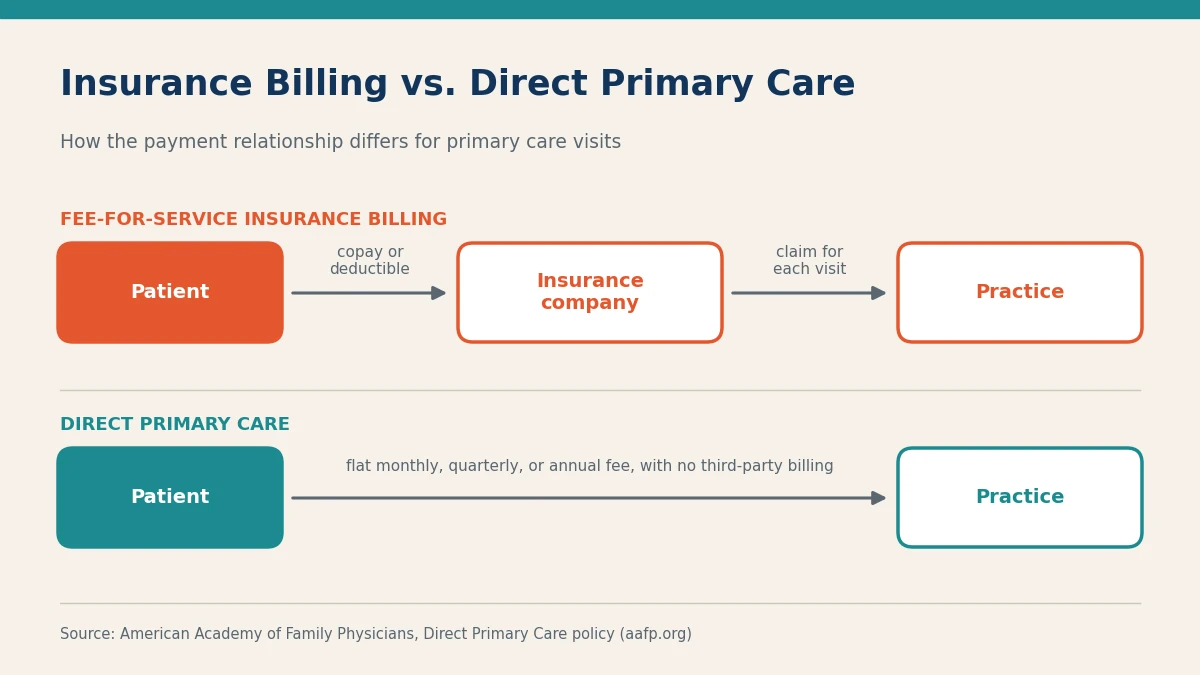
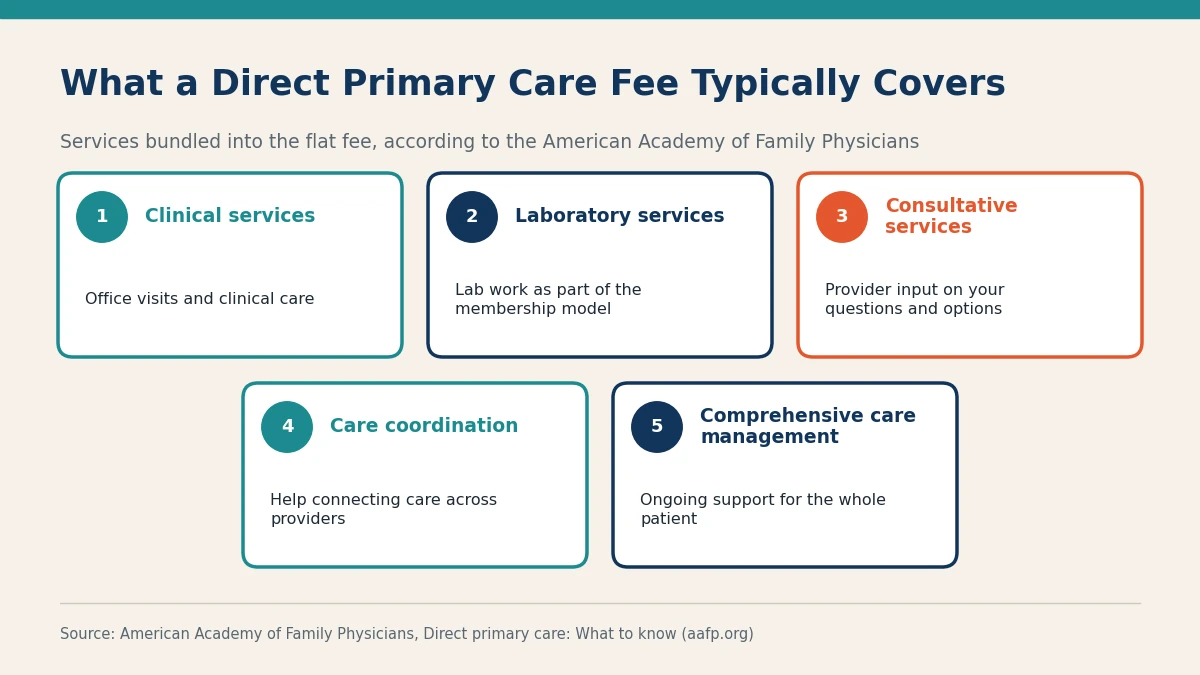
The American Academy of Family Physicians describes direct primary care as an alternative to fee-for-service insurance billing, typically built on a monthly, quarterly, or annual fee. That fee covers all or most primary care services, including clinical and laboratory services, consultative services, care coordination, and comprehensive care management. Practices in this model generally do not accept insurance or take part in government programs, relying instead on the membership fees their patients (or sometimes their employers) pay.
Removing insurance billing from everyday visits changes the experience. Providers are not bound by insurance reimbursement rules, which can make room for longer visits and communication by phone or message, and patients can see what their care costs before they need it.
Source: American Academy of Family Physicians, Direct Primary Care policy
Insurance-Billed Visits Compared With a Flat Membership
| Feature | Insurance-billed primary care | Direct primary care membership |
|---|---|---|
| Who pays the practice | Your insurance company, plus you through copays and deductibles | You, through a flat periodic fee |
| When you pay | Per visit or procedure | Monthly, quarterly, or annual membership fee |
| Insurance claims | Filed for each visit | Not used for covered primary care services |
| Hospital and specialist care | Handled through insurance | Still handled through insurance, which most patients keep |
What Is Direct Primary Care Not Meant to Replace?
A membership is not insurance. The American Academy of Family Physicians notes that because some services fall outside the fee, practices often suggest a high-deductible policy to cover emergencies, and most patients keep coverage for specialty care and hospitalizations. EBO MD’s care team follows the same approach: membership handles day-to-day primary care, while insurance remains the safety net for hospital stays, specialists, imaging, and surgery.
What a Direct Primary Care Membership Typically Covers
Because the fee replaces billing for routine visits, a good membership bundles the core of what happens in a primary care office. Across the model, that usually means the five areas below.
Source: American Academy of Family Physicians, Direct primary care: What to know
At EBO MD, membership supports the following primary care services:
- Unlimited office visits for primary care needs
- An annual wellness visit and preventive planning, with a medical history and complete physical exam
- Wellness child exams and school physicals
- Acute illness visits and minor injury evaluation
- Chronic condition support and ongoing monitoring
- Basic in-office testing and office procedures when appropriate
Student athletes are covered too, since annual physicals and sports physicals are included in the monthly fee. In-office procedures are a big part of the appeal in this model, and the American Academy of Family Physicians reports that EKGs and biopsies or excisions are the most popular procedures in direct primary care practices. Members can have EKG testing done in the office as part of their care.
Some items fall outside the monthly fee. Labs that must be sent out are not covered by membership, but members receive negotiated wholesale lab pricing with no profit added by the practice, so outside testing stays transparent.
Benefits of Direct Primary Care for Patients
Predictable Monthly Costs
Traditional visits come with copays, deductibles, and bills that arrive weeks later. A flat fee turns primary care into a budget line you can plan around. Members do not pay a copay for primary care needs covered by membership, so a follow-up visit does not carry a surprise charge.
Faster Access and Same-Day Appointments
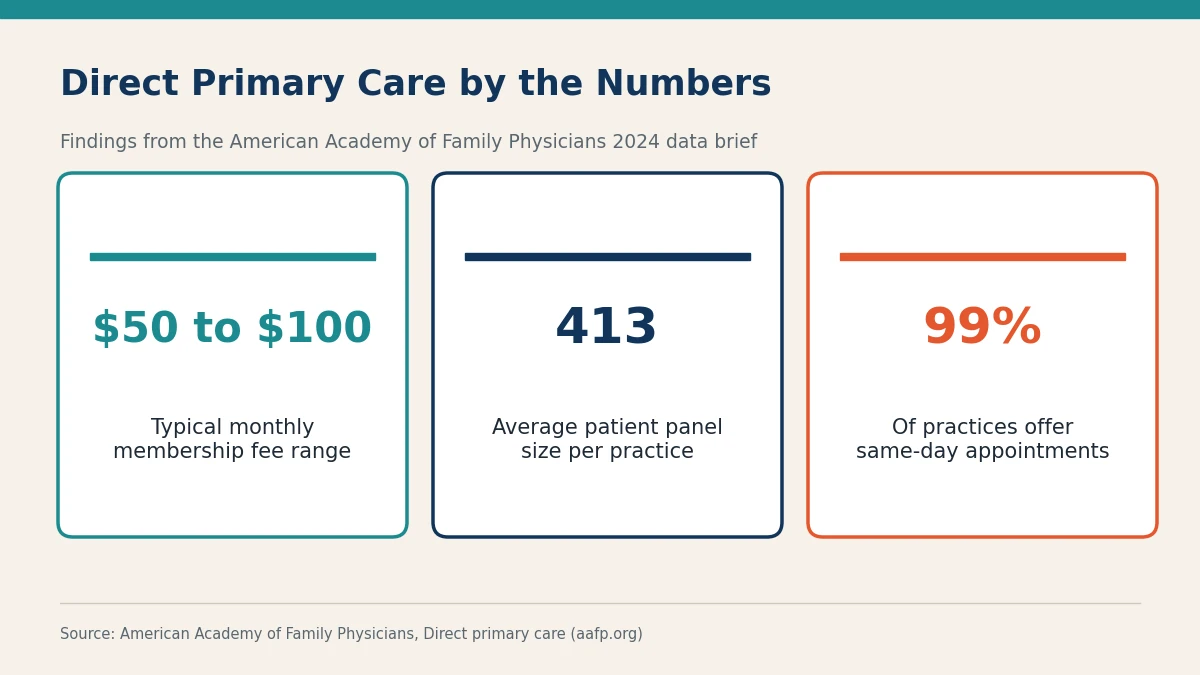
Access is where the model tends to stand out. The American Academy of Family Physicians reports that 99 percent of direct primary care practices offer same-day appointments. EBO MD limits the number of patients it cares for, which supports same-day or, at worst, next-day appointments, and members can reach a physician after hours through the telehealth membership benefit.
Source: American Academy of Family Physicians, 2024 direct primary care data brief
More Time and a Real Relationship With Your Provider
The average direct primary care practice cares for roughly 413 patients according to the American Academy of Family Physicians, which allows for more personalized and accessible care. With fewer patients and no claims to file, your provider can focus on the medical problem in front of them. Over time that continuity means a care team that knows your history, tracks your progress, and notices changes sooner.
Support for Ongoing Conditions
People living with long-term conditions benefit most from steady contact. Regular check-ins make it easier to adjust treatment, review labs, and catch problems early. EBO MD members can pair monthly visits with diabetes management for blood sugar monitoring and education without watching the number of visits.
Direct Primary Care Membership Rates at EBO MD
EBO MD publishes its fees openly. The American Academy of Family Physicians reports that monthly fees in direct primary care typically range from $50 to $100, and EBO MD keeps its structure simple:
| Membership | Monthly rate |
|---|---|
| Adult (age 19 to 64) | $99 |
| Child (ages 0 to 18), with at least one parent member | $10 |
| Senior (age 65 and older) | $75 |
| Other fees | Rate |
|---|---|
| Home visit | $65 per visit |
| Re-membership after a lapse | $250 |
| Annual physical or sports physical | Included in monthly fee |
There is no sign-up fee. EBO MD requires a minimum 90-day membership and 30 days of written notice to cancel. You can review current membership rates for the full list of inclusions. The practice also dispenses wholesale generic prescriptions in the office at wholesale prices, with charges meant only to cover costs.
| Talk With the EBO MD Team |
Using a Health Savings Account With Direct Primary Care
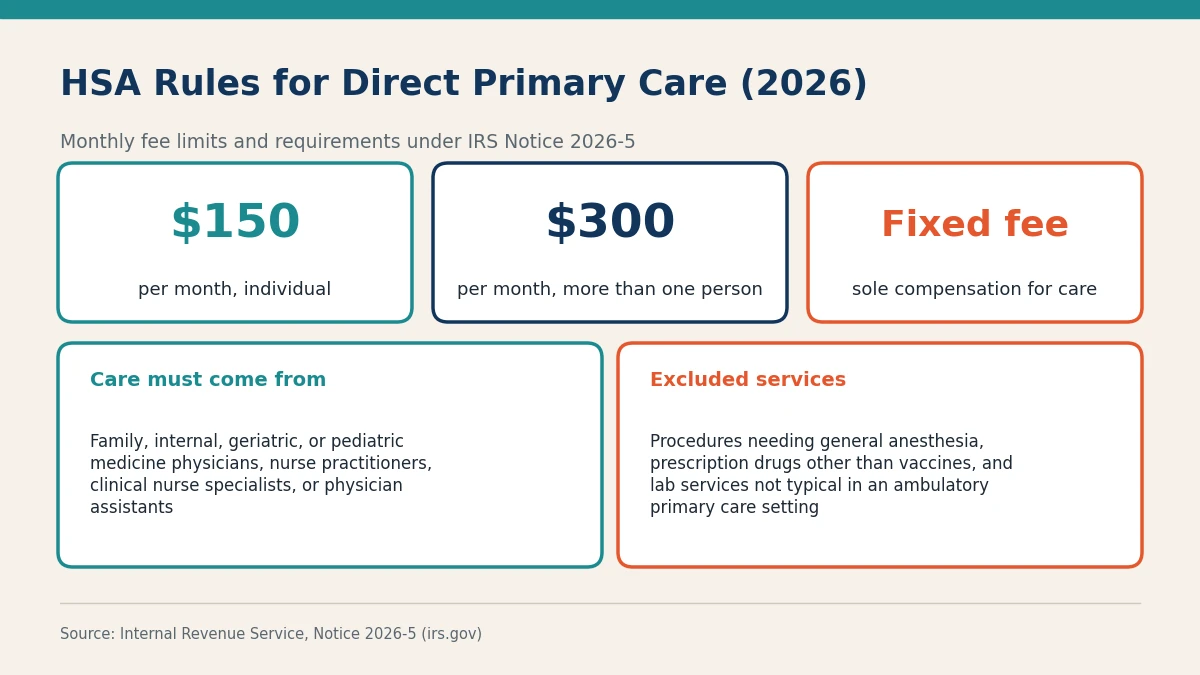
For years, a direct primary care arrangement could disqualify a person from contributing to an HSA, because the IRS treated it more like a health plan than payment for individual services. That changed on January 1, 2026. Under the One Big Beautiful Bill Act and IRS Notice 2026-5, a qualifying direct primary care arrangement is no longer treated as disqualifying coverage, as long as total monthly fees stay at or below $150 for one person or $300 for an arrangement covering more than one person. Those amounts are adjusted for inflation in later years.
Source: Internal Revenue Service, Notice 2026-5
The arrangement must pay for primary care services delivered by primary care practitioners for a fixed periodic fee, and it cannot include procedures requiring general anesthesia, prescription drugs other than vaccines, or lab services not typically performed in an ambulatory primary care setting. The IRS also says qualification depends on the terms of the arrangement, not on which services you happen to use. The American Academy of Family Physicians explains how patients can use HSA funds for direct primary care. Because every practice structures its membership differently, confirm eligibility with your HSA administrator or a tax professional before relying on it. EBO MD members can also use FSA or HSA funds toward lab costs and prescriptions, which lets them pay for those items with pre-tax dollars.
Who Direct Primary Care Fits Best
The model works for a wide range of people, but a few groups tend to notice the difference quickly:
- Busy families: one adult membership plus a $10 child rate keeps pediatric visits, school physicals, and sick visits under one predictable plan.
- People managing chronic conditions: steady access and continuity matter more when you need regular monitoring.
- Self-employed adults and people with high-deductible plans: a flat fee makes everyday care predictable even when insurance covers little of it.
- Seniors: adults 65 and older can join at the senior rate, keeping Medicare in place for care outside the practice.
- Employers: businesses can offer memberships to their teams through corporate membership for employers.
Getting Started With a Direct Primary Care Membership
Joining is straightforward. The step-by-step enrollment process is to choose a clinic, review membership, enroll online, and schedule your first visit. If you would like to know who you will be seeing first, meet the EBO MD providers, and if anything is unclear, ask a question and the team will walk you through it.
Choose the clinic that fits your routine:
| Clinic | Address | Phone |
|---|---|---|
| Cape Girardeau clinic | 1417 N Mount Auburn Road, Upper Level, Cape Girardeau, MO 63703 | 573-803-2941 |
| Jackson clinic | 1334 Indian Parkway, Jackson, MO 63755 | 573-243-0750 |
| Fredericktown clinic | 605 Lincoln Dr, Fredericktown, MO 63645 | 573-561-5051 |
| Poplar Bluff clinic | 2725 North Westwood Boulevard, Ste 4, Poplar Bluff, MO 63901 | 573-872-4171 |
Frequently Asked Questions About Direct Primary Care
What is direct primary care in simple terms?
Direct primary care is a membership model where you pay your primary care provider a flat recurring fee, usually monthly, instead of paying copays and having each visit billed to insurance. The fee covers most everyday primary care services.
Is direct primary care the same as health insurance?
No. A direct primary care membership pays for primary care access, not for hospital stays, specialists, imaging, or emergencies. EBO MD does not replace insurance, and most members keep some level of coverage for care outside the practice.
What does an EBO MD membership cover?
Membership covers unlimited office visits for primary care needs, annual wellness exams, child wellness exams, sports and school physicals, basic office procedures, in-office testing, acute illness and minor injury visits, and access to your doctor through the telehealth membership benefit.
How much does an EBO MD membership cost?
Adult membership for ages 19 to 64 is $99 per month. Child membership for ages 0 to 18 is $10 per month with at least one parent member, and senior membership for ages 65 and older is $75 per month.
Do I still need health insurance with direct primary care?
Health insurance is not required to join, but it is recommended. Insurance helps cover costs outside the practice, such as prescriptions filled elsewhere, send-out labs, imaging, specialist consultations, hospitalizations, and surgeries.
Can I use a health savings account for direct primary care?
Beginning in 2026, federal law allows qualifying direct primary care arrangements to coexist with an HSA, with monthly fee limits of $150 for one person and $300 for more than one person. Whether a specific practice qualifies depends on how its membership is structured, so confirm with your plan administrator or a tax professional.
Can I join if I have Medicare?
Yes. Your monthly membership fee cannot be submitted to Medicare for reimbursement, and you sign a waiver every two years confirming that neither you nor your doctor will bill Medicare for the fee. Medicare still covers medical costs you incur outside the practice.
Is there a sign-up fee or long-term contract?
There is no sign-up fee. A minimum 90-day membership is required, and cancellation requires 30 days of written notice.
Ready to simplify your primary care?
| Start Your Membership |
EBO MD is not insurance coverage. We encourage patients to maintain some level of health insurance to help cover the costs of medical care that they receive from medical providers/facilities outside of our practice. Insurance will help cover costs associated with, but not limited to, prescription medications, labs, imaging (X-rays, CT scans, MRIs, etc.), specialist consultations, hospitalizations, and surgeries.
If you have questions about how your existing insurance policy will work with direct primary care, contact your insurance provider.